

Interior Designers in Kollam Area Wise Guide (2026)
Interior design in Kollam needs district change significantly depending on where the home is located a backwater-facing apartment near Ashtamudi Lake needs different materials than a home in dry-zone Punalur, and a commercial space on the busy Kadappakada stretch has different constraints than a quiet residential plot in Kottiyam.
Most “interior designers in Kollam” pages treat the whole district as one uniform market. It isn’t. This guide breaks down what actually changes area by area, so you know what to ask for before you sign a quote.
Why Location Inside Kollam District Actually Matters
Kollam district spans coastal, backwater, and inland dry-zone geography within a fairly small radius, and each brings a different combination of humidity exposure, soil condition, and plot density. That combination — not the interior “style” — is what should drive material selection, waterproofing scope, and even furniture layout decisions.
A Note From Our Lead Designer
“On a recent project in a backwater-facing part of Kollam, we changed the specification for the kitchen base units after assessing the site’s humidity and ventilation conditions. Instead of applying the same material package we would use for an inland project, we recommended BWP-grade plywood and moisture-resistant finishes for the lower units. Small locality-specific decisions like this can make a significant difference to how an interior performs over the years.”
Kollam’s Design Zones at a Glance
| Zone | Localities | Primary Design Consideration | Common Home Type |
|---|---|---|---|
| Backwater & Coastal | Ashtamudi-facing areas, Thangassery, Tangasseri, parts of Chinnakada | High ambient humidity, salt-air exposure, monsoon dampness | Apartments, waterfront villas |
| Urban Commercial Core | Kadappakada, Chinnakada town, Kollam city center | Space constraints, higher footfall for commercial interiors, older building structures | Shops, offices, mixed-use buildings |
| Semi-Urban Residential | Kottiyam, Kundara, Chathannoor, Kadakkal | Moderate humidity, larger plot sizes, mix of traditional and modern builds | Independent houses, small apartment complexes |
| Inland / Dry-Zone | Punalur, Kottarakkara, Anchal, Ayoor, Karunagappally interior belt | Lower humidity, more temperature swing, often larger traditional homesteads | Traditional Kerala homes, standalone villas |
| Backwater-Adjacent Rural | Oachira, Perumpuzha, Vallikkavu, Adinad, Ambalamkunnu | Seasonal waterlogging risk, agricultural-adjacent land | Traditional and semi-traditional homes |
This is a working framework, not a rigid rule — a home three streets off Ashtamudi Lake can sit in slightly different conditions than one directly facing it. The zone tells you what to ask your designer to check, not a guaranteed spec.
The Decision Framework: What Should Change Based on Your Zone
Here’s the practical version — what we actually recommend adjusting depending on which zone a project falls into:
If you’re in the Backwater & Coastal zone:
- Prioritize marine-grade or BWP plywood over MR-grade, specifically for kitchen base cabinets and lower wardrobe shutters the parts closest to the floor take the most ambient moisture.
- Choose anti-fungal, moisture-resistant laminate finishes over standard laminate for any surface within 2 feet of the floor.
- Ask specifically about hardware corrosion resistance (SS304 hinges/channels over standard mild steel) if the home directly faces the lake.
If you’re in the Urban Commercial Core:
- Space planning matters more than material grade here — older Kadappakada/Chinnakada-area buildings often have irregular column placements and lower ceiling heights than newer construction, so a proper site measurement before design (not just a floor plan estimate) avoids costly mid-project changes.
- For retail/commercial interiors, factor footfall-related wear into flooring and finish choices from day one.
If you’re in Semi-Urban or Inland Dry-Zone areas (Kottiyam, Punalur, Kottarakkara, Chathannoor and similar):
- Standard BWP plywood is usually sufficient — spending on marine-grade here is often unnecessary cost, not a safety margin.
- Larger plot sizes common in these areas open up options like open kitchen layouts and larger modular islands that tighter coastal-zone apartments can’t accommodate.
- Traditional Kerala homesteads in these belts often need interior design that works with existing wooden structural elements (nadumuttam-style courtyards, traditional roofing) rather than a full gut renovation.
If you’re in Backwater-Adjacent Rural areas (Oachira, Perumpuzha, Vallikkavu and similar):
- Check seasonal waterlogging history for the specific plot before finalizing lower-cabinet material — this matters more than general “coastal” material upgrades.
- Budget planning should account for potential site-access costs (material transport) that urban Kollam projects don’t face.
A Failure Mode Worth Naming: Why “Standard” Plywood Fails Near the Backwaters
This is worth being specific about, because it’s one of the most common regrets homeowners in lake-adjacent and coastal pockets of Kollam report: MR-grade (moisture-resistant, not waterproof) plywood used in kitchen base units and bathroom-adjacent wardrobes in Ashtamudi-facing or Thangassery-area homes tends to swell and delaminate at the joints within the first one to two monsoon seasons not because the plywood is defective, but because MR-grade is rated for occasional moisture exposure, not the sustained ambient humidity these locations see year-round.
The fix isn’t complicated (BWP or marine-grade ply in these specific units), but it’s a spec detail that gets missed when a designer quotes the same material grade across every project regardless of location.
Material Selection Based on Kollam’s Local Conditions
Three sections:
| Location/Condition | Recommended Approach |
|---|---|
| Backwater / Coastal | BWP or marine-grade plywood for moisture-exposed units |
| Semi-Urban | Standard BWP plywood where appropriate |
| Inland / Dry Zone | Standard specifications may be sufficient depending on site conditions |
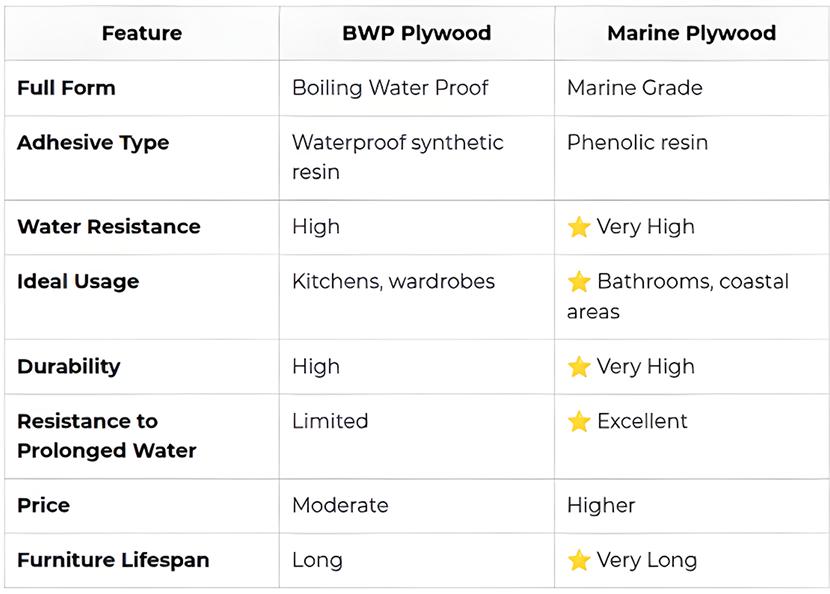
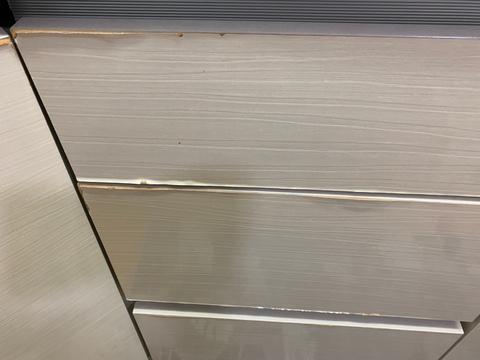
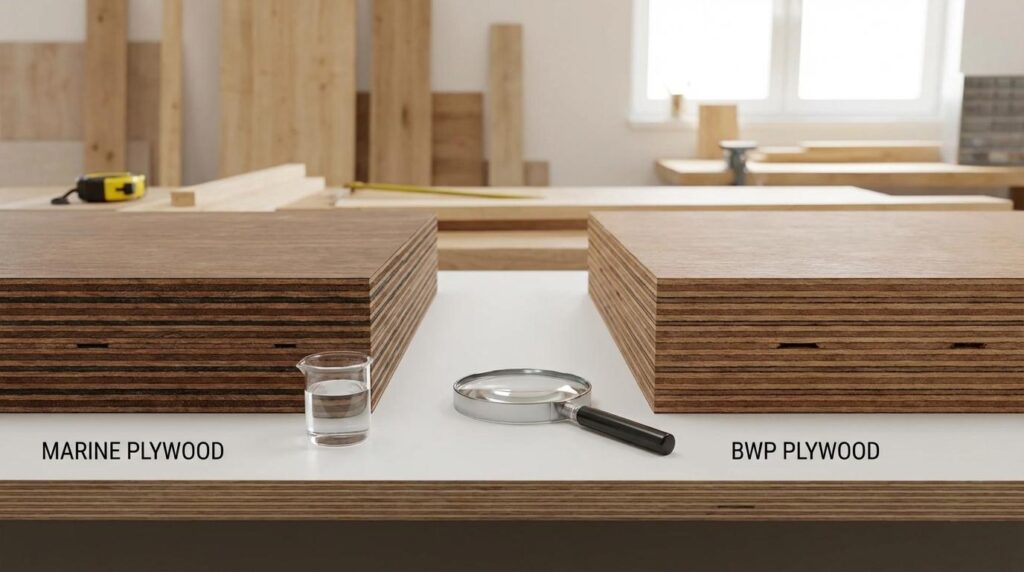
(Nila Interiors’ material selection approach for moisture-exposed interior units in different parts of Kollam district.)
A Contrarian Note: You Don’t Need to “Waterproof Everything”
A lot of general advice for coastal Kerala homes pushes homeowners toward upgrading every material to the highest waterproof grade, everywhere in the house. In practice, that’s often unnecessary spending. The zones and units that actually need the upgrade are the ones near ground level, near water sources, or with direct external wall exposure — kitchen base cabinets, bathroom-adjacent wardrobes, and ground-floor units in flood-risk pockets. Upper cabinets, bedroom wardrobes away from external walls, and inland dry-zone homes rarely need marine-grade material throughout. Spending the saved budget on hardware quality or design detailing usually delivers more value than blanket waterproofing.
How We Assess This Before Quoting
Before any design or quote is finalized, a site visit covers three things specific to location: proximity to water bodies or known waterlogging zones, existing structural condition (especially in older Kadappakada/Chinnakada-area buildings), and ventilation/airflow patterns that affect how much moisture a space actually retains day to day.
This is why quotes can vary between two similarly sized homes in different parts of the district the difference isn’t arbitrary, it’s the site condition. For a full breakdown of what drives interior design pricing in Kollam more broadly, see our interior design cost guide for Kollam.
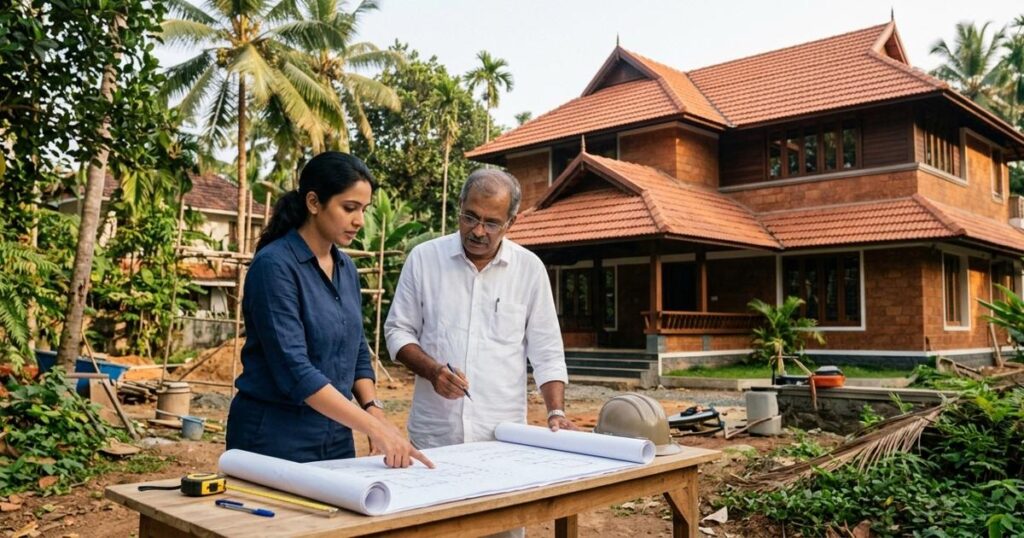
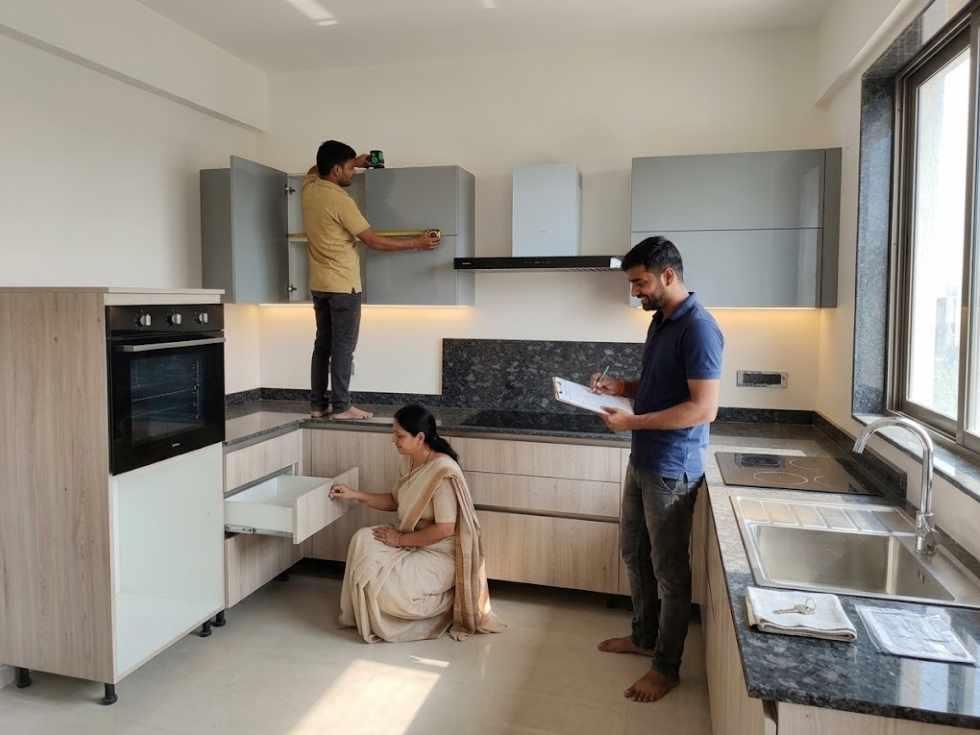
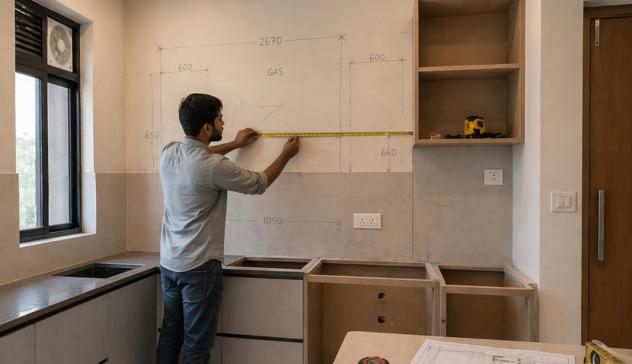
(Nila Interiors team assessing site conditions before finalising interior material specifications for a Kollam home.)
What We Often Hear From Homeowners
“We don’t want the kitchen cabinets to start swelling after one or two monsoons, that’s our main concern because the house is close to the backwaters.”
This is exactly why we assess the specific site before finalising material specifications. A locality-specific concern like humidity, swelling, corrosion, or seasonal waterlogging can directly affect the right choice of plywood, finishes, hardware, and lower-cabinet construction.
Kitchens Deserve Special Mention
Since the kitchen is usually the most material-intensive room in any interior project, and the one most exposed to moisture regardless of zone, locality-specific material choice matters most here. Our detailed guide on modular kitchen design in Kollam covers layout options and finishes in more depth if you’re planning this room specifically.
Choosing a Designer Who Understands Your Specific Area
Not every interior designer working across Kollam district adjusts their material specification by locality — many quote the same standard package regardless of where the home sits. When comparing designers, it’s worth directly asking whether their quote accounts for your specific area’s conditions, not just square footage. Our guide to hiring the best interior designer in Kollam has a fuller list of questions to ask before signing.
Frequently Asked Questions
Does interior design cost or material choice change based on which part of Kollam district I live in? Yes. Homes closer to Ashtamudi Lake, the backwaters, or coastal pockets like Thangassery typically need higher-grade moisture-resistant materials (BWP or marine-grade plywood, anti-fungal laminates) for lower cabinets and wardrobes, while homes in inland dry-zone areas like Punalur or Kottarakkara can often use standard-grade materials without added cost.
Do I need marine-grade plywood for my entire home if I live near the backwaters? No. Marine-grade or BWP plywood is generally only necessary for units near ground level, close to water sources, or with direct external wall exposure — such as kitchen base cabinets and bathroom-adjacent wardrobes. Upper cabinets and bedroom units away from external walls typically don’t need the upgrade.
Which areas of Kollam district are considered higher-humidity zones for interior design purposes? Areas closer to Ashtamudi Lake, Thangassery/Tangasseri, and other backwater-adjacent pockets like Oachira, Perumpuzha, and Vallikkavu generally see higher ambient humidity and occasional waterlogging risk compared to inland dry-zone areas like Punalur, Kottarakkara, and Anchal.
Do interior designers in Kollam serve areas outside the main town, like Punalur or Karunagappally? Most established interior design firms in Kollam, including Nila Interiors, serve the wider district including Kundara, Kottarakkara, Punalur, Karunagappally, Chathannoor, Kottiyam, and surrounding areas, not just Kollam town.
Why do two similarly sized homes in Kollam sometimes get very different interior design quotes? Beyond square footage, quotes vary based on site-specific factors like proximity to water bodies, existing structural condition, material grade required for the location, and site accessibility — which is why a proper site visit before quoting matters more than a flat per-sq-ft estimate.
Is a site visit necessary before getting an accurate interior design quote in Kollam? Yes. Since material requirements and costs can shift meaningfully based on a plot’s specific humidity exposure, structural condition, and waterlogging history, a site visit before quoting gives a far more accurate number than a generic per-sq-ft estimate.
Ready to Design Your Dream Home in Kollam?
Planning a new home interior or looking to upgrade your existing space? Nila Interiors creates practical, stylish, and location-specific interior designs tailored to your home’s needs.
📞 Kollam: +91 79070 89574
📞 Trivandrum: +91 79070 89574
📧 Email: [email protected]
Contact Nila Interiors for a free site visit and a quote built around your exact location, not a generic estimate.
👉 Call Now | Get a Quote | Book a Site Visit